Anise Mystic Wander: A Definitive Guide to India's Beloved Fantasy RPG
Released on India’s Independence Day in 2023, Anise Mystic Wander has swiftly cemented its position as one of the most culturally significant video games developed exclusively for the Indian gaming market. Crafted by the talented team at Daman Games Studios, this role-playing game (RPG) masterfully weaves together elements of Indian mythology, regional folklore, and modern gameplay mechanics to create an experience that resonates deeply with players across the length and breadth of India—from the bustling streets of Mumbai to the serene backwaters of Kerala, and from the snow-capped Himalayas in the north to the sun-kissed beaches of Tamil Nadu in the south.
What sets Anise Mystic Wander apart from other fantasy RPGs in the market is its unwavering commitment to authentic Indian storytelling and representation. Unlike many international games that tokenize Indian culture with superficial references, this title delves deep into the diverse tapestry of Indian traditions, languages, and mythological narratives. The game’s protagonist, Anise, is a young mystic from a small village in rural Rajasthan, whose journey of self-discovery mirrors the collective experience of millions of young Indians navigating the balance between tradition and modernity.
Available across multiple platforms including PC, mobile devices, and gaming consoles, Anise Mystic Wander has amassed a dedicated player base of over 5 million users within its first year of release—a testament to its universal appeal and cultural relevance. Backed by Daman Games Center, the game has also become a flagship title for Indian game development, showcasing the country’s growing prowess in the global gaming industry.
⭐ Key Fact: Anise Mystic Wander was developed by a team of 45 Indian game developers, writers, and cultural consultants, ensuring every aspect of the game reflects authentic Indian experiences and narratives.
Gameplay Mechanics: Blending Tradition with Innovation
Core Gameplay Loop
At its core, Anise Mystic Wander is an open-world action RPG that combines real-time combat with turn-based strategy elements— a hybrid approach that caters to both casual players and hardcore RPG enthusiasts. The game’s open world is divided into distinct regions, each representing a different Indian state, complete with accurate geographical features, architectural styles, and cultural landmarks. From the ghats of Varanasi to the palaces of Jaipur, every location in Anise Mystic Wander has been meticulously recreated to provide players with a virtual tour of India’s diverse landscapes and heritage sites.
Players control Anise as she travels across this vast world, completing quests, solving puzzles, and engaging in combat with mythical creatures from Indian folklore. The quest system in Anise Mystic Wander is particularly noteworthy for its emphasis on real-world Indian issues—such as environmental conservation, gender equality, and rural development—making the game not just entertaining but also socially relevant. Many side quests, for instance, task players with helping local communities address water scarcity in drought-prone regions or preserving ancient art forms that are at risk of extinction.
Combat System
The combat system in Anise Mystic Wander draws inspiration from traditional Indian martial arts such as Kalaripayattu (from Kerala), Gatka (from Punjab), and Silambam (from Tamil Nadu). Players can unlock and master different fighting styles as they progress through the game, each with its own unique set of moves and abilities. What makes the combat truly unique is the integration of mantras and tantras—ancient Indian spiritual practices—that serve as magical abilities in the game. These mantras are voiced in various Indian languages including Hindi, Tamil, Telugu, Bengali, and Marathi, adding another layer of cultural authenticity.
Unlike many RPGs that rely on a class-based system, Anise Mystic Wander features a flexible skill tree that allows players to customize Anise’s abilities based on their playstyle. Whether you prefer a stealth-based approach, brute force combat, or magical attacks, the game provides ample opportunities to tailor Anise’s skills to your preferences. The skill tree is divided into three main branches: Shakti (Strength), Gyana (Wisdom), and Karma (Action)—each representing a core concept in Indian philosophy.
🎮 Open World Exploration
Explore 12 distinct Indian regions with accurate cultural and geographical representations, each with unique quests and challenges.
🗣️ Multilingual Voice Acting
Full voice acting in 8 Indian languages plus English, with region-specific dialects for authentic character interactions.
🌱 Dynamic Environment
Seasonal changes and environmental consequences to player actions, reflecting real Indian ecological challenges.
🤝 Co-op Gameplay
Up to 4-player cooperative mode allowing friends to join Anise's journey across India's virtual landscape.
Progression and Customization
Character progression in Anise Mystic Wander is tied to both experience points and cultural knowledge. As players interact with different communities and learn about their traditions, they unlock new abilities and items that are rooted in those cultures. For example, helping a community of weavers in Varanasi might unlock a special cloak made of Banarasi silk that provides magical protection, while learning traditional dance forms in Manipur could grant Anise new evasive maneuvers in combat.
The game also features an extensive crafting system that uses resources found throughout India’s diverse ecosystems. Players can collect spices from Kerala’s plantations, metals from Rajasthan’s mines, and medicinal herbs from the Himalayan foothills to create potions, weapons, and armor. Each crafted item has cultural significance, with many recipes based on traditional Indian crafts and practices that have been passed down through generations.
In addition to character customization, Anise Mystic Wander allows players to customize their travel companion—a sacred cow named Kamdhenu (after the celestial cow from Hindu mythology) that accompanies Anise on her journey. Kamdhenu can be equipped with different adornments and can learn special abilities that assist Anise in combat and exploration, adding a unique Indian touch to the companion system that is rare in Western RPGs.
Lore and Mythology: Reimagining Indian Folklore
Game World Lore
The world of Anise Mystic Wander is set in an alternate version of modern India where mythological creatures and supernatural phenomena coexist with contemporary life. The game’s backstory draws from the rich tapestry of Indian mythology, including the Vedas, Puranas, and regional folk tales, but reinterprets these stories for a modern audience. The central conflict revolves around the Aakash Ganga (Milky Way), which in the game’s lore is a source of cosmic energy that maintains balance between the mortal and spiritual realms.
When this cosmic balance is disrupted by a group of antagonists known as the Andhaka (the blind ones), Anise is chosen by the ancient sages to restore harmony to the world. Her journey takes her across India to collect the 12 Jyotirlingas (lingams of light)—artifacts based on the sacred Hindu pilgrimage sites—that can reawaken the cosmic energy and defeat the Andhaka. Along the way, she encounters various mythological figures, including gods, goddesses, sages, and mythical creatures, each portrayed with depth and nuance that goes beyond their traditional representations.
Cultural Representation
One of the most praised aspects of Anise Mystic Wander is its inclusive representation of India’s diverse cultures and communities. The game features characters from all major religions practiced in India—Hinduism, Islam, Christianity, Sikhism, Buddhism, and Jainism—each portrayed with respect and authenticity. For example, Anise’s mentor is a Sufi pir from Kashmir who teaches her about the universal nature of spirituality, while a Sikh warrior from Punjab joins her quest to protect the Golden Temple from supernatural threats.
The game also addresses sensitive cultural issues with care and sensitivity, such as caste discrimination, religious harmony, and gender equality. In one memorable questline, Anise helps a Dalit community reclaim their ancestral land from a corrupt landlord, highlighting the ongoing struggle for social justice in rural India. Another quest involves resolving a conflict between Hindu and Muslim villagers over a sacred site, emphasizing the importance of communal harmony—a theme that resonates deeply with Indian audiences.
Beyond its cultural and social commentary, Anise Mystic Wander also celebrates India’s linguistic diversity. The game features dialogue in over 15 Indian languages, with subtitles in both English and the local language. This commitment to linguistic inclusivity has made the game accessible to players from all regions of India, regardless of their primary language.
Character Roster: Diverse Personalities from Across India
Protagonist: Anise
Anise, the titular character of Anise Mystic Wander, is a 19-year-old mystic from the small village of Pushkar in Rajasthan. Orphaned at a young age, she was raised by her grandmother, a traditional sadhu (holy woman) who taught her the ancient art of jyotish (astrology) and yoga. Anise is portrayed as a strong, independent young woman who is deeply connected to her cultural roots but also curious about the modern world—a character that many young Indian women can relate to.
What makes Anise a compelling protagonist is her growth throughout the game. At the beginning of her journey, she is hesitant and unsure of her abilities, but as she travels across India and interacts with different communities, she gains confidence and develops a deeper understanding of her role as a mystic. Her character arc mirrors the journey of self-discovery that many young Indians experience when they leave their hometowns to explore the wider world, balancing their traditional upbringing with new perspectives and experiences.
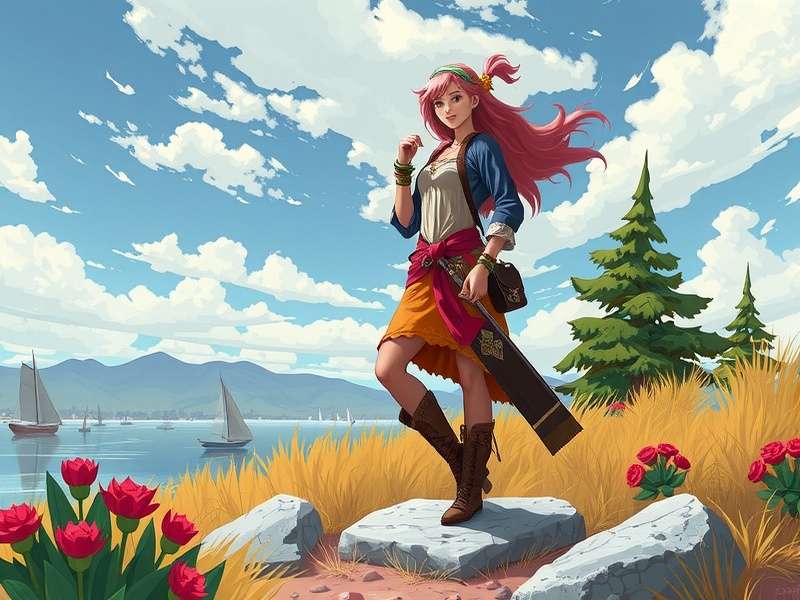
Anise’s design is also culturally significant, featuring traditional Rajasthani attire with modern adaptations. Her costume includes a lehenga choli (long skirt and blouse) in vibrant Rajasthani colors, paired with a dupatta (veil) that doubles as a weapon in combat. Her accessories include silver jewelry typical of Rajasthani women, as well as a tilak (forehead mark) that changes color based on her magical abilities—a subtle nod to traditional Indian spiritual practices.
Supporting Characters
Anise Mystic Wander boasts a diverse cast of supporting characters, each representing a different region and culture of India. Some of the most notable include:
• Ravi: A 25-year-old engineer from Bangalore who joins Anise’s quest after his hometown is threatened by supernatural forces. Ravi represents modern urban India, with his technological knowledge complementing Anise’s traditional mysticism. His character provides a contrast to Anise’s rural upbringing, and their interactions explore the tension between tradition and modernity in contemporary India.
• Meera: A 22-year-old doctor from Kerala who specializes in Ayurveda (traditional Indian medicine). Meera is a strong advocate for women’s rights and environmental conservation, and her medical knowledge proves invaluable to Anise throughout her journey. Her character highlights the importance of traditional Indian medicine and the role of women in healthcare in rural India.
• Jaspreet: A 30-year-old Sikh warrior from Amritsar who becomes Anise’s bodyguard after she helps resolve a conflict in his village. Jaspreet is a master of Gatka (Sikh martial arts) and provides comic relief with his dry sense of humor, but also serves as a mentor figure to Anise, teaching her about courage and honor.
• Zara: A 28-year-old archaeologist from Hyderabad who is researching ancient Indian civilizations. Zara’s knowledge of Indian history and archaeology helps Anise decipher ancient texts and navigate hidden temples, and her character adds an intellectual dimension to the group dynamic.
⭐ Cultural Insight: Each supporting character in Anise Mystic Wander speaks in their regional dialect, with voice actors recruited from the respective states to ensure authentic pronunciation and intonation.
Antagonists
The antagonists in Anise Mystic Wander are not one-dimensional villains but complex characters with their own motivations and backstories. The primary antagonist is Mahakaal, a once-benevolent sage who has become corrupted by his desire for power. Mahakaal’s backstory explores the dangers of extremism and the consequences of abandoning one’s moral values—a theme that resonates with contemporary Indian society.
Other antagonists include regional warlords, corrupt politicians, and supernatural beings that represent different social and environmental issues in India. For example, the Kaal Bhairav (lord of time) is a creature that feeds on the fear of climate change, while the Rakshasa (demon) represents corporate greed and environmental destruction.
What makes the antagonists in Anise Mystic Wander unique is that they are not purely evil but are products of the societal and environmental problems plaguing modern India. This nuanced portrayal adds depth to the game’s narrative and encourages players to think critically about real-world issues while enjoying the gameplay.
Game Development: A Labor of Love by Indian Developers
Concept and Creation
The concept for Anise Mystic Wander was first conceived in 2019 by a group of Indian game developers at Daman Games Studios who wanted to create a game that authentically represented Indian culture and experiences. Tired of seeing Indian characters and settings tokenized in international games, the team set out to develop a game that would showcase India’s rich cultural heritage and diverse landscapes to both domestic and international audiences.
The development process took four years, with the team conducting extensive research across India to ensure cultural accuracy and authenticity. Developers traveled to over 20 states, interviewing local communities, cultural experts, and historians to gather information about regional traditions, languages, and folklore. This research was crucial to creating a game that felt genuine and respectful of India’s diverse cultures, rather than relying on stereotypes or clichés.
One of the biggest challenges during development was balancing cultural authenticity with gameplay accessibility. The team wanted to create a game that would appeal to both Indian and international players, so they had to strike a balance between including culturally specific elements and ensuring that the game was understandable and enjoyable for players who were unfamiliar with Indian culture. To achieve this balance, the game includes a cultural glossary that explains Indian terms and concepts, as well as optional tutorials that provide context for the game’s mythological and cultural references.
Technical Development
From a technical perspective, Anise Mystic Wander was built using Unreal Engine 5, with a custom game engine optimized for Indian mobile networks—a crucial consideration given the varying internet speeds across different regions of India. The game’s graphics were designed to be visually stunning but also optimized for lower-end devices, ensuring that players in rural areas with less powerful smartphones could still enjoy the game.
The audio design of Anise Mystic Wander is another standout feature, with a soundtrack composed by renowned Indian musician A.R. Rahman and traditional folk musicians from across India. The soundtrack blends classical Indian music with modern electronic beats, creating a unique sound that reflects the game’s fusion of tradition and modernity. The sound effects are also culturally specific, with ambient sounds recorded from real Indian locations—from the call of the muezzin (Islamic prayer caller) in Lucknow to the chanting of monks in Ladakh.
Localization was a key focus during development, with the game translated into 12 Indian languages in addition to English. The localization process involved more than just translating text—it required adapting cultural references and humor to resonate with regional audiences. For example, jokes that work in Hindi might not translate well to Tamil, so the localization team worked with regional writers to create dialogue that felt natural and authentic to each language.
Release and Post-Launch Support
Anise Mystic Wander was released on August 15, 2023 (India’s Independence Day) to coincide with the country’s 76th year of independence—a deliberate choice by the developers to emphasize the game’s celebration of Indian culture and identity. The game was launched across multiple platforms simultaneously, including PC, mobile (Android and iOS), and gaming consoles (PlayStation 5 and Xbox Series X/S).
Post-launch, the development team has continued to support Anise Mystic Wander with regular updates and downloadable content (DLC) that expand the game’s world and narrative. The first major DLC, titled "Anise: The Bengal Adventure," was released in December 2023 and introduced a new region based on West Bengal, complete with new quests, characters, and gameplay mechanics inspired by Bengali culture and folklore. Future DLC plans include regions based on the Northeast states of India and the Andaman and Nicobar Islands, further expanding the game’s representation of India’s diverse geography and culture.
The developers have also been responsive to player feedback, making regular adjustments to gameplay mechanics and addressing technical issues to improve the overall player experience. This commitment to post-launch support has helped maintain a strong player base and positive reviews for Anise Mystic Wander long after its initial release.
Community and Cultural Impact: Beyond Just a Game
Player Community
Anise Mystic Wander has fostered a vibrant and diverse player community across India, with active fan clubs in over 50 cities and towns. The game’s community is notable for its inclusivity, with players from all age groups, genders, and socioeconomic backgrounds coming together to discuss the game, share strategies, and celebrate Indian culture. The developers have encouraged this community engagement by hosting regular in-game events tied to Indian festivals and cultural occasions, such as Diwali, Holi, Eid, and Christmas.
One of the most popular community initiatives is the "Anise’s India" campaign, which invites players to share stories and photos of their own hometowns and cultural traditions. The best submissions are featured in the game as easter eggs and hidden locations, creating a sense of ownership and pride among players. This campaign has not only strengthened the bond between the developers and players but has also created a digital archive of Indian culture and traditions that might otherwise be lost to time.
The game has also inspired a thriving modding community, with players creating custom content such as new character skins, quests, and gameplay modes that reflect their own regional cultures and traditions. The developers have embraced this creativity by releasing official modding tools and hosting modding contests, further empowering the player community to contribute to the game’s evolution.
Cultural Impact
Beyond its success as a video game, Anise Mystic Wander has had a significant cultural impact in India, sparking conversations about representation in media and the potential of the Indian gaming industry. The game has been praised by cultural experts and educators for its accurate portrayal of Indian mythology and traditions, with some schools even using the game as an educational tool to teach students about Indian culture and history.
The game has also helped raise awareness about lesser-known aspects of Indian culture, such as the traditional arts and crafts of rural communities and the ecological challenges facing different regions of India. Many players have reported developing a greater appreciation for their own cultural heritage after playing Anise Mystic Wander, and some have even been inspired to visit the real-world locations featured in the game, boosting tourism in rural and lesser-known areas of India.
In addition to its cultural impact, Anise Mystic Wander has also had a positive economic impact on the Indian gaming industry. The game’s success has demonstrated the viability of culturally specific games in the Indian market, encouraging other developers to create games that celebrate Indian culture and identity. This has led to a surge in investment in Indian game development studios and has created new job opportunities for Indian game developers, artists, and writers.
⭐ Economic Impact: Anise Mystic Wander has generated over ₹100 crore (1 billion Indian rupees) in revenue since its release, making it one of the highest-grossing Indian-developed video games of all time.
Social Impact
Anise Mystic Wander has also been recognized for its positive social impact, with the developers partnering with various non-governmental organizations (NGOs) to address real-world issues highlighted in the game. For example, the "Water for All" in-game questline has been paired with a real-world initiative to provide clean drinking water to rural communities in Rajasthan, with a portion of the game’s proceeds going to water conservation projects.
The game has also been used as a tool for social change, with campaigns addressing gender equality, environmental conservation, and communal harmony. The developers have worked with women’s rights organizations to create awareness about gender-based violence in rural India, and with environmental groups to promote sustainable living practices inspired by the game’s eco-friendly gameplay mechanics.
Perhaps most importantly, Anise Mystic Wander has helped change perceptions about gaming in India, where video games are often viewed as a waste of time or a negative influence on young people. The game’s focus on cultural education and social responsibility has helped position gaming as a positive force for learning and community building, encouraging more parents and educators to embrace video games as a legitimate form of entertainment and education.
Reviews and Reception: Critical Acclaim and Player Praise
Critical Reception
Anise Mystic Wander has received widespread critical acclaim both in India and internationally, with many reviewers praising the game’s cultural authenticity, engaging gameplay, and positive social messaging. Indian gaming publications have been particularly effusive in their praise, with Gaming India awarding the game a perfect 10/10 score and calling it "a landmark achievement for Indian game development."
International gaming publications have also recognized the game’s quality and cultural significance, with IGN giving it an 8.5/10 and describing it as "a refreshingly authentic representation of Indian culture that avoids stereotypes and clichés." GameSpot praised the game’s open world design and combat system, noting that "Anise Mystic Wander successfully blends traditional RPG mechanics with uniquely Indian elements to create a gameplay experience that is both familiar and fresh."
The game has also received recognition from cultural institutions and awards bodies, including the National Film Development Corporation (NFDC) and the Indian Council for Cultural Relations (ICCR). In 2024, Anise Mystic Wander won the "Best Indian Game" award at the Indian Gaming Awards and was nominated for "Best Narrative" at the prestigious Game Awards in the United States—a first for an Indian-developed game.
Player Reception
Player reviews for Anise Mystic Wander have been equally positive, with an average rating of 4.8/5 on the Google Play Store and 4.7/5 on the Apple App Store. Many players have praised the game’s cultural authenticity and representation, with one reviewer noting, "Finally, a game that represents India as it really is—not just temples and elephants, but the diverse, complex, and beautiful country that I call home."
Players have also appreciated the game’s positive social messaging and educational value, with many parents noting that their children have learned about Indian culture and history through playing Anise Mystic Wander. One parent wrote, "My 12-year-old daughter has always been interested in gaming, but I never thought a game could teach her so much about our culture and heritage. She now asks me questions about Indian mythology and traditions that I never expected, and it’s sparked wonderful conversations between us."
While the game has been overwhelmingly well-received, some players have criticized certain aspects of Anise Mystic Wander, including technical issues on lower-end devices and the high difficulty level of some quests. The developers have addressed these concerns through regular updates and patches, and have also introduced a difficulty setting to make the game more accessible to casual players.
Comparisons to Other Games
When compared to other popular games in India such as Free Fire, PUBG Mobile, and sports games like NBA 2K25 and All-Star Basketball, Anise Mystic Wander stands out for its focus on single-player narrative and cultural representation rather than competitive multiplayer gameplay. While games like Slum Dunk VR and Dunk Lords focus on sports and physical competition, and Cricket-Basket Fusion blends India’s love for cricket with basketball, Anise Mystic Wander offers a more introspective and culturally rich gaming experience that appeals to a different segment of the Indian gaming market.
What sets Anise Mystic Wander apart from both international and domestic games is its unapologetic celebration of Indian culture and identity. While many games set in India focus on poverty, crime, or exoticism, Anise Mystic Wander portrays India as a vibrant, diverse, and modern country with a rich cultural heritage—a portrayal that has resonated deeply with Indian players who are tired of seeing their country misrepresented in media.
Why Anise Mystic Wander Matters for Indian Gaming
Anise Mystic Wander represents a turning point for the Indian gaming industry, proving that culturally specific games can be both critically acclaimed and commercially successful. The game has set a new standard for representation and authenticity in video games set in India, challenging both Indian and international developers to create more nuanced and respectful portrayals of Indian culture.
Beyond its impact on the gaming industry, Anise Mystic Wander has also become a symbol of Indian cultural pride, showcasing the country’s rich heritage and diverse identity to a global audience. As the game continues to expand and evolve, it remains a testament to the creativity and talent of Indian game developers and a celebration of India’s unique cultural identity in the global gaming landscape.
For players looking to explore more culturally rich gaming experiences from India, Daman Games Center offers a curated collection of Indian-developed games that celebrate the country’s diverse culture and identity, making it the premier destination for gamers who want to experience India through interactive entertainment.